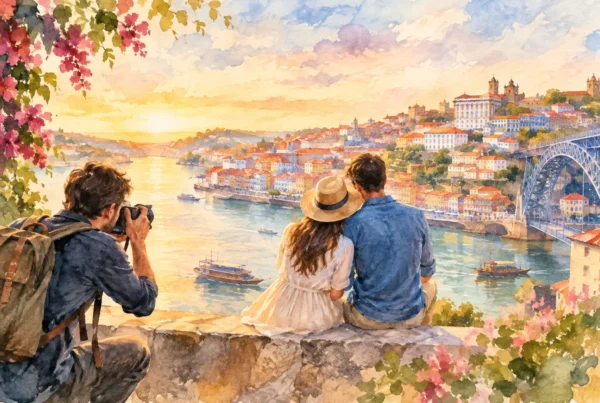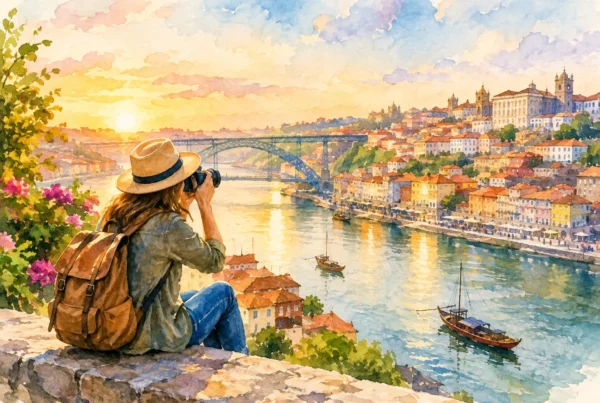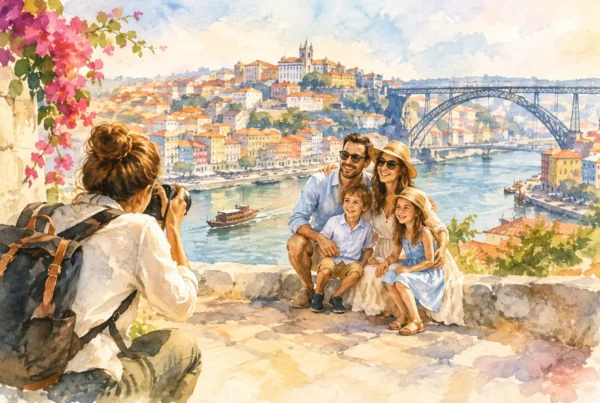

The Douro does not need much help to be beautiful. Terraced vines rise above the river, stone estates hold the afternoon heat, and the light changes from bright and clean to gold in what feels like minutes. What it does need is a Douro vineyard photoshoot photographer who knows how to place you in that landscape without turning the experience into a string of stiff poses.
The best photographs from a Portugal trip should feel like a memory with more detail. Not just proof that you stood in front of a famous view, but a record of the hand you reached for, the laugh that arrived between directions, and the quiet feeling of being somewhere extraordinary together.
What Makes a Douro Vineyard Session Different
A vineyard session in the Douro Valley is not a studio portrait session moved outdoors. The setting has its own rhythm. There are steep paths, changing weather, working estates, shaded corners, open terraces, and long drives between viewpoints. A photographer needs to understand how to work with all of it rather than fight it.
That begins with timing. Midday can be beautiful for the valley itself, but it is often less forgiving for portraits. The brightest sun creates hard shadows and a sharper, more editorial mood. Late afternoon usually brings softer skin tones, warmer color, and the kind of light that lets the vines, hills, and river feel connected in one frame.
Still, there is no single perfect rule. A summer shoot may call for an early morning start before the heat settles into the terraces. A cloudy day can be ideal for walking through the vines without squinting, especially for families with children. The right plan depends on the season, your energy, the estate, and whether the photographs should feel sun-soaked, quiet, dramatic, or intimate.
Choose a Photographer Who Notices the In-Between
You do not need to know how to pose to have beautiful photographs. In fact, trying too hard to pose is often what makes people feel unlike themselves in the final gallery.
A thoughtful Douro vineyard photoshoot photographer gives enough direction to make you feel comfortable, then leaves space for real interaction. You might be asked to walk slowly along a vineyard row, share something you remember about your trip, or pause together at a viewpoint. These are not tricks. They are simple ways to create movement and give your attention somewhere other than the camera.
Look for a portfolio where people appear present rather than perfectly arranged. Are couples touching naturally? Do family photographs have warmth and movement? Can you imagine yourself in the images without feeling like you would need to perform a version of yourself?
Technical skill matters, of course, but it should serve the feeling. Strong composition, careful use of light, and an eye for the valley’s layers can turn a beautiful setting into a photograph with depth. More importantly, experience helps a photographer know when not to interrupt. Often the image worth keeping happens just after the planned one, when everyone exhales.
The Location Should Fit Your Story
The Douro Valley is vast, and not every vineyard experience looks or feels the same. Some estates are refined and architectural, with broad terraces, elegant tasting rooms, and composed views over the river. Others feel more rustic, with narrow stone tracks, old olive trees, and vine rows that seem to continue into the hills.
For a honeymoon or anniversary, a quieter estate at golden hour may be the right fit. For a family session, access, shade, and room for children to move matter more than the most dramatic overlook. If you are planning a surprise proposal, privacy and a clear line of sight become essential. The best location is not always the one with the biggest view. It is the one that lets the moment unfold naturally.
A local photographer can help narrow those choices based on the kind of experience you actually want. That might mean arranging a vineyard session around a private wine tour, choosing a scenic route that avoids the busiest times, or finding a lesser-known corner where you can be together without an audience.
Plan for the Feeling, Not Just the Backdrop
It is tempting to build the session around a checklist: vines, wine glass, river view, sunset. Those elements can be lovely, but a session becomes more personal when it includes how you want the afternoon to feel.
Maybe you want to celebrate an engagement without making the whole shoot about the ring. Maybe this is your first trip without the kids in years, or the trip you promised yourselves after a difficult season. Maybe you are traveling alone and want photographs that feel confident, reflective, and unmistakably yours.
Share that context before the session. It helps shape the pace, the location, and the kind of direction you receive. A photographer who understands the occasion can create space for it without forcing sentiment into every frame.
At By RuPe, the approach is built around real connection, captured as it happens. That means allowing the landscape to be magnificent while keeping the people in the photographs at the center.
What to Wear in the Vineyards
Choose clothes that feel like you, only slightly more considered. If an outfit makes you tug at the fabric, worry about the neckline, or struggle to walk, it will distract from the experience.
Soft neutrals, earth tones, faded blues, warm reds, and natural textures tend to sit beautifully against the greens, golds, and stone of the Douro. You do not need to match exactly with a partner or family. Coordinating colors and similar levels of formality usually look more natural than identical outfits.
Shoes deserve more thought than most visitors expect. Some vineyard paths are uneven, and terraces may involve stairs or loose gravel. Bring footwear you can walk in confidently, even if you change into a dressier option for a few portraits. A long dress can look beautiful in the wind, but it should still allow you to move.
If You Are Planning a Surprise Proposal
A proposal is a one-time moment. The photography should feel discreet, but the planning should be precise.
Before the day, your photographer should know the exact location, the direction you will approach from, the approximate timing, and a simple signal that tells them the moment is about to happen. It is also wise to have a backup plan for weather, traffic, or an unexpectedly busy terrace.
Afterward, do not rush straight into formal portraits. Take a few minutes to be engaged before the camera becomes visible. Let the surprise settle. Then the session can continue as a relaxed celebration, with real joy still close to the surface.
Give the Day Enough Room
A Douro photo session often sits within a larger day of travel, lunch, tastings, and sightseeing. That is part of its charm, but overscheduling can make beautiful places feel rushed.
Build in time for the drive, a change of clothes if needed, and a few unplanned minutes at the location. If a wine tour is part of the day, consider whether you would rather photograph before the tasting, when everyone feels fresh, or later, when the mood is more relaxed. Neither choice is wrong. It depends on whether you want polished anticipation or the softer ease of an afternoon already well spent.
The strongest images rarely come from trying to control every second. They come from choosing a setting with intention, trusting the person behind the camera, and being fully where you are. Let the vines, the river, and the late Douro light do their part. Your only job is to experience the day together.