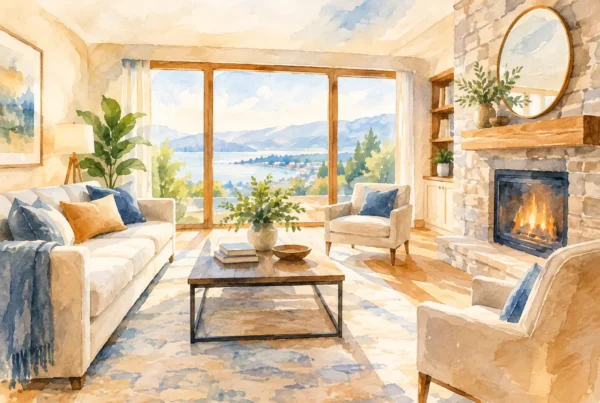

A finished building is never just a finished building. It holds hundreds of decisions about light, proportion, circulation, material, and the feeling someone has when they step inside. Architect portfolio photography should make those decisions visible without turning the work into a glossy fiction. The aim is not simply to prove that a project exists. It is to show how it thinks.
For an architect, the right images can shape the next commission before a potential client reads a single project description. They help a homeowner imagine living there, allow an editor to understand the story at a glance, and give collaborators a record of what was made together. That asks more of photography than a wide shot of a clean room. It asks for attention, patience, and a clear reading of the architecture.
Architect Portfolio Photography Starts With the Story
Every project has a visual center of gravity. In one home, it may be the quiet transition from a dark entry to an open, sunlit kitchen. In another, it may be a stair that organizes the entire plan, a window that frames the river, or a rough original wall held beside precise new joinery.
Before the shoot, decide what the project needs to say. Is it a restoration that respects the marks of time? A compact apartment that creates a surprising sense of calm? A hospitality space built around movement and atmosphere? These are not marketing slogans. They are practical direction for deciding where to spend time and what not to photograph.
A useful brief covers the project’s intention, the non-negotiable details, the spaces that must be shown, and the intended audience. A home submitted to a design publication may need a fuller sequence and more contextual frames. A studio pursuing residential clients may need fewer images, but each one should make the experience of the space immediate.
The architect should also share drawings, material references, and any early concept imagery. Not because photography needs to copy the renderings, but because the photographer needs to understand the logic behind the finished result. The best images often reveal an idea that is felt more than explained.
Show the Building as a Sequence, Not a Set of Isolated Rooms
Architecture is encountered in time. We arrive, pause, turn a corner, look through an opening, and notice how one room leads to another. A portfolio works harder when it preserves some of that rhythm.
Begin with images that establish the project in its setting. This does not always mean a distant exterior. Sometimes the most honest context is a threshold, a view through foliage, a facade meeting a narrow street, or a terrace opening toward the landscape. In Porto, for example, a project may be defined as much by its relationship to tiled neighboring buildings, steep streets, and changing Atlantic light as by the interior itself.
Then move inward. Photograph the transitions: the doorway, hall, stair, corridor, or change in ceiling height. These frames give the viewer orientation. They also prevent the portfolio from becoming a collection of beautiful but disconnected surfaces.
Wide images are necessary, but they cannot do all the work. A considered portfolio needs medium views that show relationships between elements and close details that make the material language tangible. The grain of timber, a recessed handle, a shadow crossing stone, or the edge where old plaster meets new steel can carry as much authorship as the larger room.
There is a trade-off here. Too many detail images can make a project feel fragmented. Too many wide views can make it feel anonymous. The final edit should move naturally between the whole and the intimate, giving a viewer enough information to understand the design and enough atmosphere to remember it.
Light Is Part of the Design
A space can look entirely different at 9 a.m. than it does in late afternoon. That is especially true in projects built around courtyards, large glazing, textured surfaces, or views. Scheduling is not a minor production detail. It is part of how the architecture is represented.
Morning light may reveal the softness of a bedroom or bring a calm clarity to a north-facing room. Later light may create the long shadows that give a living area dimension. Overcast conditions can be ideal for an exterior with delicate materials and minimal contrast. A dramatic sunset is not automatically better. If it overwhelms the facade or contradicts the project’s restrained character, it works against the image.
This is why a site visit, or at least a careful conversation about orientation, matters. The photographer can plan around the spaces that receive fleeting light and leave more evenly lit rooms for another part of the day. A full-day shoot is often worthwhile for a substantial project because it makes room for the building’s natural changes rather than forcing every image into one visual mood.
Artificial lights need the same restraint. Turning on every fixture can flatten an interior and create a staged, showroom feeling. Yet leaving everything off can make a dusk image feel empty. The right choice depends on the architecture, the available light, and what the image is meant to communicate.
Prepare the Space Without Erasing Life
A well-prepared project photographs better, but preparation should not strip away its character. Architecture needs to be clear. It does not need to look unlived in.
Remove visual distractions such as packaging, cables, cleaning supplies, temporary signs, and unfinished installation work. Check that blinds, curtains, doors, and furniture are positioned deliberately. Straighten what should be straight, but do not over-correct a space until it loses warmth.
Whether people belong in the images depends on the project. For a private residence, a subtle human presence can explain scale and make the rooms feel inhabited: someone reading by a window, setting a table, or moving through a doorway. For a highly minimal project or a competition submission, empty frames may better preserve the geometry.
The key is believability. A person placed stiffly in the middle of a room becomes a prop. Real gestures work because they honor the way spaces are actually used. The same principle applies to styling. A few objects with texture and purpose can help, while excessive styling can distract from the architect’s work.
What Makes an Architectural Image Feel Credible
Perspective must feel intentional. Vertical lines that lean carelessly can make a carefully designed building feel unstable, while extreme correction can remove depth and make a space seem flat. A strong image finds the balance: composed, accurate, and still alive.
Credibility also comes from showing constraints as well as polished moments. Not every image needs perfect symmetry. A view that includes the neighboring roofline, the narrowness of an urban plot, or the roughness of an original wall can explain what the project had to respond to. These conditions are often where the design becomes most interesting.
Retouching should support the image, not rewrite the building. Correct temporary blemishes and distracting elements when appropriate, but avoid skies, materials, and views that promise something the visitor will never see. Architecture photography has a responsibility to be aspirational without becoming misleading.
This matters in a portfolio because trust accumulates. When a client later visits a project, the experience should feel consistent with the photographs. That honesty protects the architect’s reputation and makes the images more enduring.
Build an Edit That Helps Clients Choose You
A portfolio is not an archive. It is an argument for the kind of work you want next.
Choose images with a clear role. One may establish the site, another explain the plan, another reveal the material palette, and another carry the emotional memory of the project. If two images say the same thing, keep the stronger one. A concise edit usually creates more confidence than an exhaustive gallery.
Order matters, too. Lead with an image that makes someone stop, then give them enough visual information to understand why the project deserves that attention. End on a frame with a little afterimage: a lit window at dusk, a quiet courtyard, a detail touched by late sun. It should feel less like a sales pitch and more like an invitation to look again.
For architects building a practice around thoughtful, place-sensitive work, the photograph is not a final administrative step after completion. It is part of the project’s public life. Give it the same care you gave the first sketch, and the next client may recognize your point of view before they know how to name it.