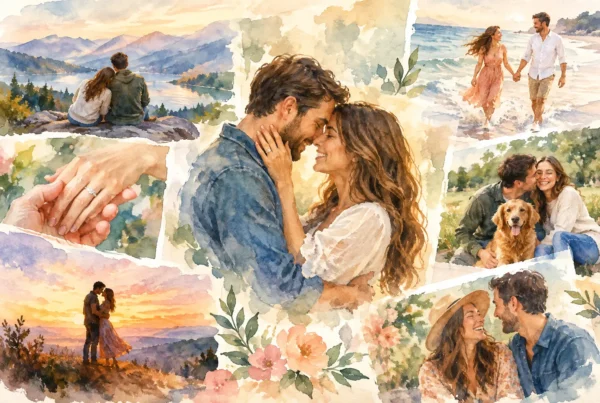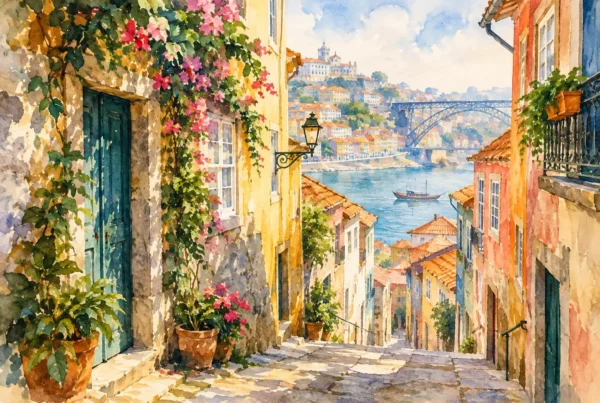

Your favorite photo from a trip may not be the one where everyone looked directly at the camera. It may be the second before: your partner laughing on a steep Porto street, your child gripping a pastel de nata with both hands, or the quiet look you shared as the Douro turned gold below you. That is the heart of documentary versus posed vacation photography. One approach asks you to perform for the image. The other makes room for the trip to unfold.
Neither style is automatically better. The right choice depends on what you want to remember, how comfortable you feel in front of a camera, and whether you want photography to be an activity on your itinerary or a natural part of the experience.
What posed vacation photography gives you
Posed photography is intentional. The photographer places you in good light, gives clear direction, and creates a composed image with everyone looking their best. There is a reason this style remains popular: it delivers certainty.
For a honeymoon, anniversary, engagement, or family trip, a few polished portraits can be genuinely valuable. You may want one image where everyone is visible, standing together, and looking toward the camera. Grandparents love it. It can become the framed photograph, the holiday card, or the picture that marks a particular year in your family’s life.
Good posing does not have to mean stiff posing. A thoughtful photographer can adjust a hand, suggest where to stand, and help you find a flattering angle without making you feel like you are at a department-store portrait session. Light direction, posture, and composition matter. A little guidance often makes the difference between a phone snapshot and a photograph you want to keep.
The trade-off is attention. A fully posed session can pull you out of your surroundings. You stop to arrange yourselves, wait for instructions, and become aware of how you look. For some people, that structure feels reassuring. For others, it creates the exact self-consciousness they hoped to avoid.
What documentary vacation photography feels like
Documentary photography begins with observation rather than direction. Instead of asking you to hold a smile in front of a landmark, the photographer watches for gestures, movement, glances, and small moments of connection. You walk, talk, taste the wine, take in the view, or simply pause together. The photographs happen within that real rhythm.
This style is especially meaningful when travel is part of the story. Porto is not only a backdrop to stand in front of. It is the curve of the river under the Dom Luís I Bridge, the sound of a tram approaching, the shine of rain on cobblestones, and the way late light catches the tiled facades in Ribeira. In the Douro Valley, it may be the winding road, vineyard terraces, a hand reaching for a glass, or the breeze interrupting an otherwise quiet afternoon.
Documentary images often feel more personal because they preserve how a place felt, not just proof that you were there. A photograph of you looking out across the valley can say more about a honeymoon than a perfectly aligned smile ever could. It holds the pause.
That does not mean documentary photography is random or careless. The best candid images rely on timing, composition, local knowledge, and an instinct for human behavior. The photographer is still shaping the frame. They are simply not asking you to become someone else for it.
Documentary versus posed vacation photography: the real difference
The clearest difference is not whether you look at the camera. It is where the energy comes from.
With posed photography, the image leads the experience. You go to a location because it will photograph well, then create a moment for the frame. With documentary photography, the experience leads the image. You choose what feels true to your trip, and the frame grows from what happens there.
A posed photograph often says, “Here we are.” A documentary photograph can say, “This is who we were together that afternoon.” Both have a place in a gallery. The question is which sentence you want your photographs to speak most often.
There is also a practical difference for travelers who do not enjoy being photographed. Posed sessions can be efficient, but they may feel high-pressure if you are worried about expressions, posture, or what to do with your hands. Documentary sessions make movement useful. Walking side by side, stopping for coffee, looking at a view, or talking about the day gives you something real to do. The camera becomes less of an event and more of a quiet presence.
When a little direction makes the photographs stronger
Choosing documentary does not mean refusing every bit of guidance. In fact, the most natural vacation galleries usually sit somewhere between pure observation and gentle direction.
A photographer may suggest beginning early, when Porto’s streets are quieter and the light is soft. They may lead you toward a less crowded viewpoint, ask you to walk on the side with better light, or encourage you to slow down when a beautiful scene is unfolding. They might briefly position you for a portrait, then step back as your conversation resumes.
This is not forced posing. It is thoughtful choreography with room to breathe.
For couples, a few prompts can help: walk ahead together, share what surprised you most about the city, or take a moment to look at the river. The aim is not to manufacture laughter. It is to create enough space for a genuine reaction. Families benefit from this, too. Children rarely thrive on repeated instructions to stand still and smile. Give them room to explore, and their personality returns to the photographs.
Which style works best for proposals?
A surprise proposal is its own category because the moment cannot be repeated. Documentary coverage is usually the right foundation. The photographer needs to remain discreet, understand the location, anticipate where you will stand, and recognize the moment without interrupting it.
After the proposal, gentle portrait direction becomes useful. Adrenaline is high, the light may be changing, and you deserve a few beautiful images together where rings, faces, and the setting are clearly seen. The strongest proposal galleries often combine both: the honest surprise, the tears, the embrace, and then a calm set of portraits while the feeling is still fresh.
The same blended approach works for elopements, anniversary sessions, and milestone trips. You do not have to choose between emotional truth and a photograph worthy of printing large.
Questions to ask before booking
Rather than asking whether a photographer shoots candid or posed images, ask how they work when you feel awkward. Ask how much direction they give, whether they help plan locations around light and crowds, and what happens if the weather changes. Their answer will tell you more than a label.
Look closely at full galleries, not only highlight images. Do people look relaxed? Are there quiet in-between moments as well as polished portraits? Can you see a sense of place without every photograph becoming a landmark checklist? If every couple appears in the same stance at the same viewpoint, the work may be beautiful but less personal.
It also helps to be honest about your own hopes. If you want one classic image where everyone is looking at the camera, say so. If you want to spend the session tasting wine, wandering streets, or letting your children set the pace, say that too. The right photographer will build a session around those priorities rather than force a preset formula.
Let the trip stay yours
The best vacation photographs do not ask you to trade the experience for the evidence of it. They let you be present in the place you traveled so far to see.
At By RuPe, that often means beginning with a simple plan, then leaving room for the unscripted parts: a sudden laugh, a change in light, a street you did not expect to love, or the hand you reached for without thinking. A few intentional portraits can anchor the story. The rest should feel like your time in Portugal, honestly remembered.