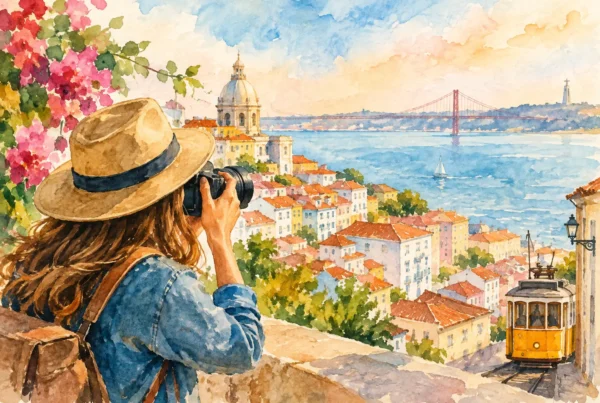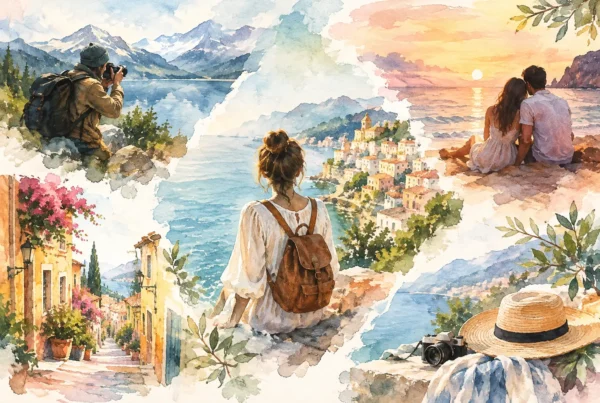

A portrait does not become editorial because someone wears a dramatic outfit or looks away from the camera. The best editorial portrait examples feel like a frame lifted from a story already in motion. There is atmosphere, intention, and room for a real person to exist without performing.
For travelers, couples, and solo visitors, that difference matters. You did not come to Portugal simply to stand in front of a landmark and smile on command. You came for the late dinners, tiled facades, river air, vineyard roads, and the feeling of being somewhere new together. An editorial approach gives those details a place in the photograph without making the experience feel staged.
What Makes a Portrait Feel Editorial?
Editorial portraiture borrows its visual language from magazines, artist profiles, fashion stories, and travel journals. Yet it does not need to be distant or overly styled. At its best, it is thoughtful rather than stiff.
The photographer pays attention to how light lands across a wall, how a coat moves in the wind, and what a location says about the person in front of it. Expression matters more than a perfected smile. Composition may be more deliberate, but the moment should still feel lived-in.
There is a trade-off. A tightly art-directed image can be visually striking, but it may feel less spontaneous. A completely candid image can be full of emotion, but it may not have the shape or visual clarity of an editorial frame. The most memorable sessions usually sit between those two places: gently guided, never over-controlled.
12 Editorial Portrait Examples to Inspire a Session
1. Walking Through a Quiet Street
A subject walking through a narrow Porto street is a simple starting point, but it rarely looks simple in the final image. The pace creates natural movement in clothing and hands, while old stone, painted doors, or patterned tile give the photograph context.
Rather than asking someone to walk toward the camera with a fixed expression, let them move toward a destination. A coffee shop, a viewpoint, or a meeting point with their partner gives the gesture a reason. The image becomes less about posing and more about presence.
2. A Couple in the Space Between Moments
Not every couple portrait needs a kiss. Often, the more editorial frame happens immediately before or after it: one person adjusting the other’s sleeve, a private glance, shared laughter after an imperfect direction.
This kind of photograph works especially well on a bridge, beside the Douro, or at a quiet restaurant table. The setting supports the story, but the connection remains the center. It feels intimate without asking a couple to imitate intimacy.
3. The Window-Light Portrait
Window light has a softness that suits reflective, close portraits. Picture a traveler by the window of a historic hotel, an apartment, or a wine bar before the evening begins. The scene can be quiet, even still, while the light supplies the mood.
This is one of the strongest editorial portrait examples for people who worry they are not comfortable on camera. There is no need to do much. Looking outside, holding a glass, or simply settling into the room can create a photograph with depth.
4. A Solo Traveler Claiming the Frame
A solo portrait should not look like evidence that someone traveled alone. It can look self-possessed, curious, and open to the place around them. A subject framed against the geometric lines of modern architecture, or paused in a pocket of late-afternoon light, has a clear visual point of view.
The best direction is often practical: walk here, pause there, turn toward the sound of the tram. Small cues give structure while leaving space for personality. A polished image does not require a fashion-model stance.
5. The Portrait With a Strong Foreground
Editorial photographs often use layers. A branch, café chair, doorway, passing tram, or reflection can sit between the camera and the subject, creating a sense of looking into a real scene rather than arranging one from scratch.
This technique suits destinations full of texture. In Porto, the curve of a wrought-iron balcony or a table set near a window can add depth without distracting from the person. It is not about making an image complicated. It is about giving the eye somewhere to travel.
6. Wind, Fabric, and Movement
Movement is one of the easiest ways to remove the feeling of a formal portrait. A long coat on a riverside walk, a dress moving through vineyard grass, or a scarf caught by a coastal breeze introduces a little unpredictability.
The wardrobe does not need to be extravagant. Clothing with texture and a little movement photographs beautifully, especially in neutral or rich, understated colors. Comfort still comes first. If an outfit makes you feel unlike yourself, the image will usually reveal that tension.
7. A Portrait at the Table
Some of the most personal travel photographs happen over a meal. Hands reaching for bread, wine being poured, a half-finished conversation, and evening light across the table all suggest a larger story.
This approach is ideal for anniversaries, honeymoon trips, and friends traveling together. It works because no one has to pretend dinner is a photoshoot. The camera observes the details that make the evening yours.
8. A Vineyard Portrait With Scale
The Douro Valley offers a naturally cinematic setting, but a strong portrait does not need to place a person squarely in the center of every sweeping view. Sometimes the better frame makes them small against terraced hills, a winding road, or rows of vines.
That sense of scale creates feeling. It says something about the day, the landscape, and the pause you took within it. For a closer portrait, shade from a stone wall or the warm edge of late-day sun can bring the focus back to expression.
9. The Architectural Portrait
For someone drawn to design, an architectural setting can become part of the portrait rather than a background. Strong lines, repeating windows, concrete curves, and shadow patterns can make an image feel clean, modern, and quietly bold.
Here, posture matters a little more because the space is graphic. But direction can remain relaxed: lean, sit, look upward, take a few steps, then stop. The goal is to create a relationship between body and setting, not a rigid pose.
10. A Candid Proposal After the Question
A proposal has one unrepeatable moment, and the most moving portraits often come after the question has been asked. Hands shake. Someone laughs and cries at once. The newly engaged couple may forget the camera entirely.
An editorial approach adds careful planning before the moment: choosing a location with room to breathe, understanding the light, and staying discreet. Afterward, there is time for a few composed portraits that still carry the emotion of what just happened.
11. Night Portraits With City Glow
Not every session needs golden light. Blue hour and early evening can make portraits feel intimate and cinematic, especially when warm window light, street lamps, or reflections on wet pavement enter the frame.
Night work asks for patience and a little flexibility. The photographs may be moodier and less bright than daytime images, which is precisely the appeal for some people. If your best memories begin after dinner, a darker visual story may be truer to your trip.
12. The Unplanned Last Frame
The final image of a session is often not the one anyone planned. It may be a couple walking away, a child running ahead, someone laughing while checking their coat pocket, or a traveler taking one more look at the view.
These frames matter because they release the expectation of making a photograph. They are not filler. They are often the image that feels most like memory.
How to Make Editorial Portraits Feel Like You
Start with a setting that means something, even if the meaning is simply that you love its light. A favorite wine bar, the route you walked that morning, a quiet hill above the river, or a vineyard you chose for a long lunch can all be more powerful than an overcrowded must-see location.
Wear something that feels considered but familiar. Editorial style is not a costume requirement. A well-cut jacket, flowing dress, textured knit, or simple shirt in a color you enjoy can be enough. Avoid matching every detail with your partner unless that reflects how you naturally dress together.
Most of all, choose a photographer who knows when to direct and when to step back. You may need help finding the best light or knowing what to do with your hands. That is normal. Good direction gives you something real to respond to, then leaves room for the expressions and gestures that cannot be manufactured.
The photographs worth keeping are not proof that everything went perfectly. They are the ones that bring back the temperature of the air, the sound of the street, and the person beside you. Let the session make room for that.