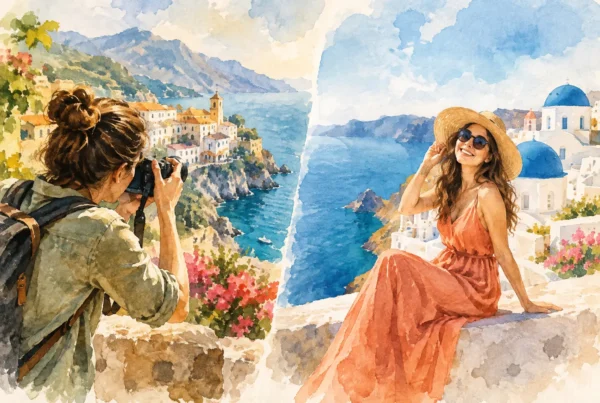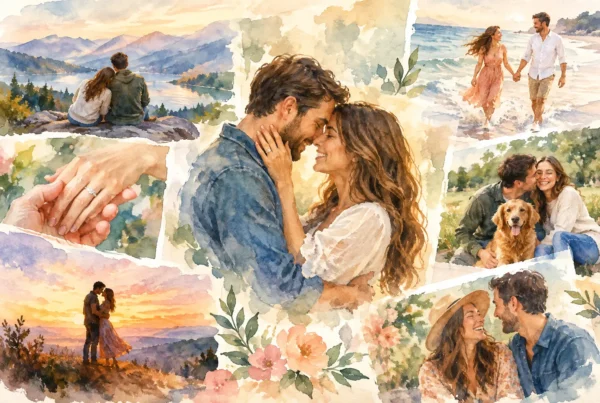

A vineyard does not need much help to look beautiful. The real question is how you want to feel in the photographs: elegant but still like yourself, relaxed enough to walk the terraces, close enough to your partner to forget the camera is there. The best outfits for vineyard portraits are not the most formal or trend-driven ones. They are the pieces that move with you, sit naturally against the landscape, and leave room for a real moment.
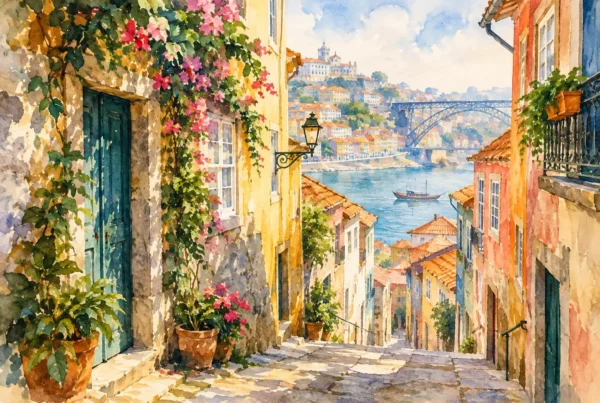
In the Douro Valley, that landscape has its own voice. Vine rows create rhythm. Stone walls add texture. The river catches the late-afternoon light, while the hills can look warm, dry, and almost cinematic by summer. What you wear should complement that atmosphere, not compete with it.
Start With Movement, Not a Perfect Pose
A vineyard portrait session works best when it feels less like a photo shoot and more like an unhurried walk through a place you came all this way to see. You may be moving between terraces, sharing a glass of wine, holding hands along a narrow path, or pausing while the sun falls behind the hills. Clothing that lets you move freely changes the whole experience.
For dresses and skirts, look for fabrics with softness and motion. Linen, cotton voile, silk blends, crepe, and lightweight knitwear tend to photograph beautifully because they catch a breeze without looking overly styled. A midi or maxi length often gives the image a sense of shape and movement, especially on the open hillsides.
For men, an unstructured linen shirt, a soft cotton button-down, or a fine-knit polo can feel polished without becoming stiff. Pair it with tailored trousers, chinos, or well-fitting dark denim depending on the season and the level of formality you want. A jacket can work well in spring or fall, but only if it feels like something you would genuinely wear. If you spend the entire session tugging at the sleeves, it will show.
The goal is not to arrive in matching costumes. It is to wear clothing that makes it easy to lean in, laugh, walk, sit, and be close.
Colors That Belong in the Vineyard
The Douro is rich with earthy color: faded green leaves, terracotta soil, pale stone, deep river blue, and golden light. The most flattering palette usually sits alongside those tones rather than trying to outshine them.
Soft neutrals are always a strong choice. Cream, ivory, oatmeal, warm beige, camel, taupe, and soft gray photograph with an effortless, editorial quality. They also allow the vineyard and the changing light to remain part of the story.
Muted colors bring a little more personality while still feeling connected to the setting. Think sage, olive, dusty blue, slate, rust, cinnamon, burgundy, soft rose, or muted mustard. A deep wine red can be especially striking among the vines, but it is worth balancing it with softer surrounding pieces so the frame does not become too heavy.
White can be beautiful, particularly in golden-hour light, but pure bright white sometimes reflects more strongly than expected. Ivory, off-white, or cream usually has more warmth and dimension. Similarly, black can create a clean, dramatic look, especially for a more fashion-led session, though it can feel visually heavier under a bright Portuguese sun. If black is your signature, wear it. Just consider softening it with natural textures or a lighter partner outfit.
Try to avoid neon shades, highly saturated primary colors, and large blocks of bright logos. They pull attention away from faces and can date an image quickly. Tiny patterns are another thing to approach carefully. What looks subtle in person can become distracting or flicker on camera. Solid colors, tonal layers, and larger, quieter patterns usually feel more timeless.
For Couples: Coordinate, Don’t Match
Matching white shirts and jeans are not required. In fact, the most natural couples’ portraits tend to come from outfits that feel individually true but visually connected.
Start with one person’s anchor piece – perhaps a flowing rust dress, a navy linen shirt, or a cream knit – then build the other outfit around its mood and color temperature. A sage dress and tan trousers, a cream skirt and soft blue shirt, or a burgundy blouse with charcoal pants can all work beautifully. Aim for colors that live in the same family, with enough contrast that you do not blend into each other.
Texture helps, too. Linen beside a soft knit, a simple dress beside a brushed cotton shirt, or denim paired with silk can give portraits depth without adding visual noise. It is often these small differences that make an image feel considered rather than coordinated for coordination’s sake.
Choose Shoes for the Ground You’ll Actually Walk On
The romantic images may show a quiet terrace and a perfect view, but vineyards are not flat studio floors. There can be gravel, uneven stone, steps, loose earth, and narrow paths between vines. Shoes matter.
For most sessions, flat leather sandals, loafers, ankle boots, clean sneakers, or block-heeled shoes are more practical than narrow heels. If you love the look of heels, bring them for a few still portraits, then change into something secure for walking. Comfort gives you more locations, more ease, and a far better chance of being present with each other.
A long dress can hide practical footwear in many frames, but it should not become a tripping hazard. Make sure the hem length works with the shoes you plan to wear. For men, avoid athletic shoes with loud branding unless the rest of the look is deliberately casual. Clean, simple footwear keeps the attention on the people and the setting.
Dress for the Season, Then for the Photograph
Douro Valley weather can be warm and bright, particularly from late spring through early fall. In summer, breathable fabrics are more valuable than a complicated outfit. Linen and lightweight cotton will feel better during a vineyard walk than synthetic fabrics that hold heat. Consider bringing a second shirt if you are planning a longer day that includes a private wine experience.
Spring and fall can bring cooler mornings, wind, and a sharp temperature drop after sunset. Layers are useful here, but choose layers with intention. A wool overshirt, soft cardigan, light blazer, suede jacket, or scarf can add texture and give you options without looking bulky. Neutral outerwear tends to keep the look cohesive if you put it on halfway through the session.
Winter vineyard portraits have a quieter beauty: bare vines, misty hills, and low, gentle light. Rich fabrics such as wool, cashmere, corduroy, and structured cotton photograph especially well then. A long coat can become part of the image, not something to hide from it.
Bring One Small Backup, Not a Whole Wardrobe
An outfit change can be worthwhile if you want two distinct moods – perhaps a relaxed daytime look and something a little more refined for sunset. More than one change, though, can break the rhythm of the session. The strongest portraits often happen once you have stopped thinking about the camera.
Instead of packing several full options, bring a small set of thoughtful backups: a light layer, alternate shoes, blotting papers for warm days, hair ties, and anything that helps you feel comfortable. If you wear glasses, decide whether you want them in the photographs or would prefer to switch between a few frames. Both are completely valid, but it is better to make the choice before the moment begins.
For a surprise proposal, keep the plan simple. Wear something that feels special enough for the occasion but believable for the day you have planned together. A proposal should not feel like a performance arranged around an outfit. The photographs are there to hold the surprise, the nerves, the laughter, and the first quiet minutes afterward.
Let Your Outfit Sound Like You
There is no single correct vineyard look. A silk dress and loafers may feel right for one couple. For another, it is vintage denim, boots, and a favorite shirt worn slightly open at the collar. The difference is not about what photographs better on a mood board. It is about whether you recognize yourselves when you look back.
Choose pieces you have worn before, or try new pieces on at home and move in them. Sit down, walk up steps, reach for your partner, and see whether the clothing stays comfortable. When an outfit feels natural on your body, you spend less time adjusting it and more time noticing the light, the view, and the person beside you.
That is the detail worth dressing for: not a perfectly curated version of the trip, but the feeling of having been there together, with the vines around you and nowhere else you needed to be.