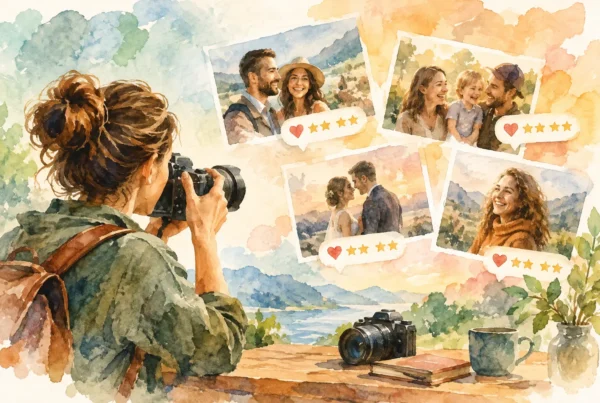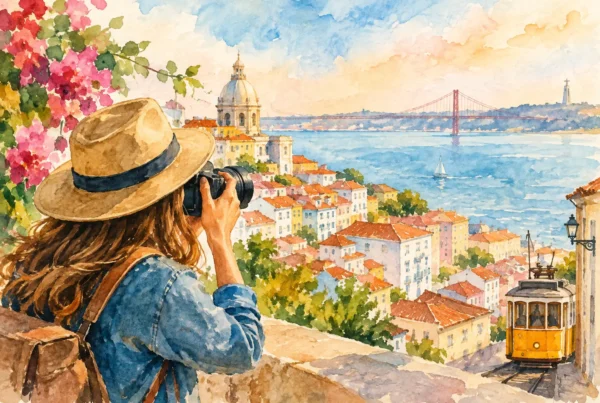

The best travel photographs rarely happen when everyone stops walking and says, “Smile.” They happen when you are halfway across Dom Luís I Bridge, when your partner laughs at the wind, when a child reaches for a pastel de nata, or when late sun catches the tiled facades of Porto. This travel photography guide is about noticing those moments and giving them enough room to happen.
A beautiful trip deserves more than proof that you visited. The images worth keeping should bring back the pace of a street, the warmth of a hand, the strange little joke that made you both laugh. Whether you bring a phone, a camera, or book a photographer to join part of the day, the goal is the same: photographs that feel like you were really there.
Start with a story, not a shot list
Landmarks matter, especially on a first visit. But a trip photographed only as a checklist can end up looking like everyone else’s. Instead of asking, “What do we need to get?” ask, “What do we want to remember?”
Maybe it is the quiet first coffee before the city wakes up. Maybe it is a long lunch beside the Douro, shoes dusty after wandering uphill. Perhaps it is the way your family settles into a new place after the first uncertain hour. These are the details that turn a gallery into a personal record rather than a collection of backgrounds.
Choose two or three places that genuinely fit your day, then leave space between them. In Porto, that might mean beginning in the softer morning streets around Miragaia, crossing toward Ribeira when the city is alive, and ending above the river as the light turns gold. In the Douro Valley, it may be less about moving quickly between viewpoints and more about staying long enough to feel the scale of the vineyards and river below.
Let the light shape your plans
Portugal has strong light, which is part of its beauty and part of its challenge. At midday, bright sun can make people squint and deepen shadows under the eyes. This does not mean you should hide indoors all afternoon, but it does mean that timing affects the feeling of your photographs.
Early morning is ideal when you want quiet streets, gentle light, and a slower rhythm. It works especially well for couples who would rather have space to themselves than pose among crowds. Late afternoon and the hour before sunset create warmer color and a softer edge, particularly along the river or in the open valley.
Cloudy weather deserves more credit than it gets. Overcast skies make color richer, reduce harsh contrast, and can give Porto’s old stone and painted tiles a cinematic mood. A little rain can be lovely, too, if you are willing to treat it as part of the story. Reflections on cobblestones, an umbrella shared between two people, and the mist over the river are not ruined plans. They are Portugal being itself.
Photograph the in-between moments
The most natural images usually come from movement. Walk toward one another. Pause at a shop window. Fix your jacket. Look out over a viewpoint without being told exactly where to put your hands. Small actions give your body something honest to do, and that removes the pressure to perform for the camera.
If you are taking photographs of someone you love, resist correcting every detail. A slightly windblown hairstyle or a laugh that arrives at the wrong moment is often more beautiful than a perfect expression held too long. Take one composed portrait if you want it, then keep shooting as the moment loosens.
For families, lower your expectations of stillness. Children do not need to be managed into a postcard version of happiness. Let them lead for a few minutes. A race down a quiet lane, sticky fingers after a treat, or a parent kneeling to listen can tell the truth of a family trip far better than a row of fixed smiles.
Use your phone with intention
A phone can make excellent travel photographs when you slow down enough to use it deliberately. Wipe the lens first. It sounds simple, but it makes a visible difference after a day in pockets and bags. Then turn on the grid and pay attention to the edges of the frame. A beautiful scene can lose its calm if a half-cut signpost or a bright trash bin pulls the eye away.
Try stepping closer before zooming. Portrait mode can be useful for a single person, but it often struggles with hair, hands, and detailed backgrounds. In a place like Porto, where the setting is part of the memory, a standard camera view can feel more believable.
Take a wide image that holds the architecture and a closer one that holds the feeling. Photograph the blue tiles, then photograph the hand brushing against them. Capture the valley from above, then the wine-stained table and the tired, happy faces after lunch. The combination gives your album rhythm.
Put yourselves in the frame
Many travelers return with hundreds of views and almost no evidence that they shared the experience. Handing your phone to a stranger can solve this occasionally, but it often produces one rushed image where everyone looks politely surprised.
A small tripod and timer can work for relaxed travelers, especially at a quiet viewpoint. Set the frame first, then forget about the device for a moment. Walk, talk, or sit together rather than staring toward the lens. You may need several attempts, but the process is easy when there is no schedule attached.
For an anniversary, honeymoon, proposal, or meaningful family trip, a professional session can be a different kind of souvenir. The value is not simply sharper images. It is having someone who can read light, choose a setting that fits your energy, and give gentle direction without turning the afternoon into a performance. A good photographer knows when to step in and when to disappear.
Choose locations that feel like your trip
The famous view is famous for a reason, but it is not the only option. The strongest locations have visual character and emotional relevance. A small street near your hotel may matter more than a popular overlook because it is where you got lost, found dinner, or decided to extend your stay.
In Porto, narrow lanes, textured walls, riverfront steps, and high viewpoints all photograph differently. Cobblestones ask for comfortable shoes and patience. Riverside areas bring movement and color, but also crowds. Elevated views feel expansive, though wind and changing weather can be part of the experience. There is no single best setting. It depends on whether you want intimacy, energy, architecture, or room to breathe.
The Douro Valley asks for a slower approach. Terraced vineyards are grand from a distance, but the smaller details matter just as much: a curve in the road, leaves moving in the breeze, a glass catching afternoon light. If wine is part of the day, keep the photography around the experience rather than interrupting every moment of it.
A travel photography guide for surprise proposals
A proposal has no second take, which makes planning useful, not restrictive. Choose a location with a clear reason to be there: a viewpoint before dinner, a vineyard walk, a scenic stop during a private day in the valley. Think about where the light will fall, where people may gather, and how easily you can arrive without giving away the surprise.
Discretion matters as much as composition. The person proposing should know where to stand without looking staged, while the photographer needs a believable place to wait and a clear signal that the moment is about to happen. Afterward, do not rush immediately into formal portraits. Let the first few minutes unfold. Those disbelieving smiles, shaky hands, and quiet embraces are often the photographs that matter most.
Edit with restraint and save the whole story
At the end of the trip, do not keep only the obvious winners. Save the imperfect frames that carry feeling: the blurred laugh, the street musician just outside the frame, the rain-speckled window on the train. They may not belong on a postcard, but they can become the image that takes you back fastest.
When editing, aim for the atmosphere you remember. Heavy filters can flatten the particular colors of a place and date quickly. A modest adjustment to brightness, warmth, and crop is usually enough. Print a few favorites rather than leaving every image inside a camera roll. Photographs become more present when they live where you can see them.
The real secret is not a better camera or a more dramatic pose. It is permission to be present while the photograph is being made. Notice the light, stay close to the people you came with, and let the trip remain a trip. The images will have something real to hold onto.