
A boutique hotel can have perfect plaster walls, sculptural lighting, and a view worth crossing an ocean for. Yet if every image feels empty, over-lit, or too carefully arranged, guests will scroll past. The strongest boutique hotel photography examples do more than record a room. They make someone imagine the first coffee by the window, the quiet return after dinner, or the feeling of waking somewhere beautifully unfamiliar.
For design-led properties, photography is not simply a record of inventory. It is the first chapter of the guest experience. The images need to show what the hotel looks like, certainly, but also how it feels to move through it.
What Great Boutique Hotel Photography Actually Shows
A chain hotel often needs clarity and consistency at scale. A boutique property has a different job. Its character may live in the irregular tilework, a vintage chair, the shadow that falls across a linen bedspread, or the way a host welcomes guests into a tiny lobby. Those details are not decorative extras. They are the reason a guest chooses one place over another.
The most memorable boutique hotel photography balances three things: space, atmosphere, and human possibility. Space tells travelers what they are booking. Atmosphere gives the architecture a pulse. Human possibility lets the viewer picture themselves there without turning the hotel into a staged lifestyle ad.
That balance depends on the property. A restored townhouse may need intimate, moody images that honor its age. A bright coastal retreat may ask for air, movement, and open doors. A city hotel built around art and nightlife can carry more energy after dark. There is no single visual formula, and that is exactly the point.
Boutique Hotel Photography Examples Worth Studying
The arrival image that creates a sense of place
A wide exterior is useful, but a building alone rarely tells the whole story. Consider an arrival photograph from the street or courtyard that includes a little context: warm light behind a doorway, a textured façade, an open gate, or the neighboring city seen beyond the entrance.
In Porto, for example, an old stone frontage can feel entirely different at blue hour than it does at noon. One image may establish the architecture; another can suggest the relief of arriving after a day on cobbled streets. Neither needs a person in it to feel welcoming.
The room that feels ready, not frozen
A room photograph should be clear enough for a guest to understand its scale, layout, and key features. But it should not look as if no one has ever touched it. A folded throw at the end of the bed, a book left near a chair, soft curtains moving at an open window, or morning light reaching across the floor can make a room feel inhabited without making it messy.
This is one of the most useful boutique hotel photography examples because it solves a real tension. Hotels need accurate room imagery for booking confidence, while travelers want an emotional reason to choose the space. A clean, considered composition can do both.
Avoid filling every frame with props. A tray, a robe, and a glass of wine may be appropriate if they are part of the actual stay. When every surface is styled with objects, however, the image can begin to feel like a catalog rather than a place guests can enter.
The detail that reveals the hotel’s point of view
Close photographs give a property rhythm. They might focus on hand-painted tiles, handmade ceramics, the texture of a headboard, a brass key, locally made soap, or the curve of a staircase railing. These images show care, especially when the hotel has invested in craft, local makers, or a distinctive design language.
Details work best when they support the larger story. A beautiful faucet is not compelling on its own unless it belongs to a bathroom that feels exceptional. Think of detail images as pauses between wider scenes, not substitutes for showing the room.
The shared space with a little life in it
Lobbies, breakfast rooms, bars, terraces, and libraries are often where boutique hotels become memorable. They are also the spaces most likely to feel flat when photographed empty under uniform light.
A quiet human presence can help. Someone reading in a lounge chair, a bartender finishing a drink, or a couple lingering over breakfast gives scale and warmth. The goal is not to manufacture a party. It is to photograph a believable moment that allows potential guests to step into the scene.
For properties that value privacy, the people can remain anonymous. A hand holding a coffee cup, a figure seen from behind, or guests entering a sunlit terrace can convey experience without turning the image into a portrait session.
Food and drink as part of the ritual
Breakfast, welcome drinks, and a hotel bar often carry more emotional weight than their practical role suggests. A breakfast table set near a window can speak to slow mornings. A simple glass of wine on a terrace can suggest the beginning of an evening.
The best images here are specific. Rather than photographing every item on a buffet, show the ritual the hotel creates: locally baked bread, fruit arranged with restraint, a server pouring coffee, or light catching a table just before guests arrive. If the property has a strong restaurant program, the food deserves more coverage. If breakfast is modest, an honest image is better than an elaborate fiction.
The view, photographed at the right moment
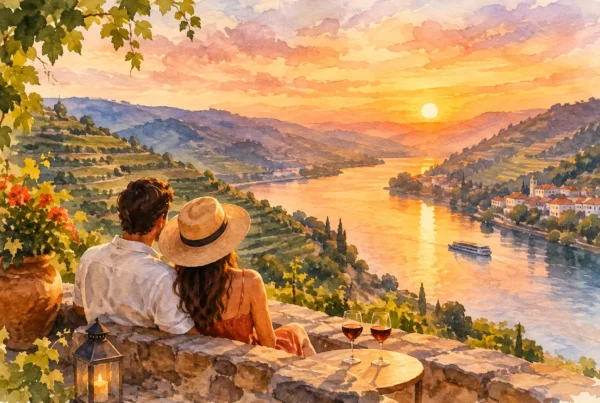
Views sell, but only when they are treated as part of the stay. A river, vineyard, garden, or city skyline needs the right conditions and a foreground that creates a sense of being there. Photographing a view through open shutters, from the edge of a balcony, or with the corner of a lived-in room in frame is often more inviting than a distant landscape alone.
Timing changes everything. Harsh midday light may be accurate, but it can flatten a beautiful scene. Early morning, late afternoon, and the soft transition into evening often reveal depth, color, and atmosphere with less effort.
Why Empty Rooms Are Not Always the Answer
Many hotel image libraries are built almost entirely from vacant spaces. There is a good reason for this: empty rooms show architecture clearly, protect guest privacy, and remain useful for booking platforms. They should be part of the collection.
But an all-empty gallery can unintentionally make a hotel feel clinical. Boutique hospitality is usually built on personality, care, and a sense of welcome. A few honest lifestyle images can communicate those qualities far more quickly than another angle of the same bedside table.
The trade-off is control. Real moments can be imperfect. A sleeve may fall awkwardly, weather can shift, and a breakfast scene may not look identical to one planned in a studio. Yet a photograph with a little unpredictability often feels more trustworthy. It is the difference between showing a space and showing a stay.
Planning Images That Match the Guest You Want
Before a shoot, a property should decide what it wants guests to feel first. Calm? Romance? Creative energy? Privacy? Connection to the neighborhood? That answer shapes the visual direction more effectively than a shot list alone.
A romantic weekend hotel may prioritize warm bedrooms, bathtubs, low evening light, and intimate corners. A design hotel might focus on materials, architectural lines, and the relationship between old structure and contemporary furniture. A vineyard retreat can show the journey between interiors and landscape, from the first view of terraced hills to a long lunch outdoors.
It also helps to think about where the photographs will appear. Booking platforms need straightforward, informative frames. Social channels can hold more mood, movement, and detail. Editorial features may benefit from a fuller narrative of the building, its makers, and the people behind it. One thoughtful shoot can serve all three, but only if it is planned with variety in mind.
The Feeling Guests Carry Away
The most effective hotel photographs do not insist that a place is luxurious, romantic, or original. They give viewers enough truth to feel it for themselves. A creased linen curtain, an early table setting, rain on a courtyard stone, late sun in an empty hallway – these are small observations, but they can hold the entire character of a stay.
For a boutique hotel, that character is the product. Photograph it with the same care guests will feel when they walk through the door.