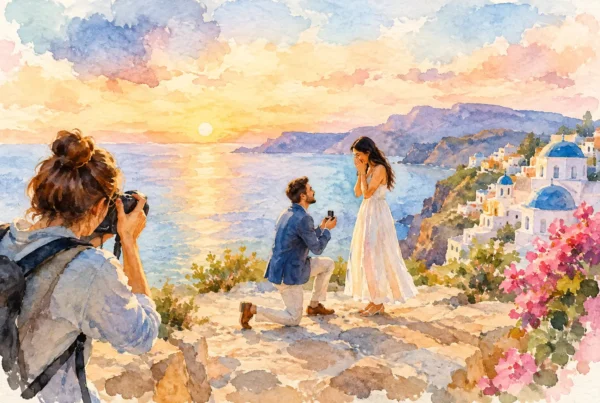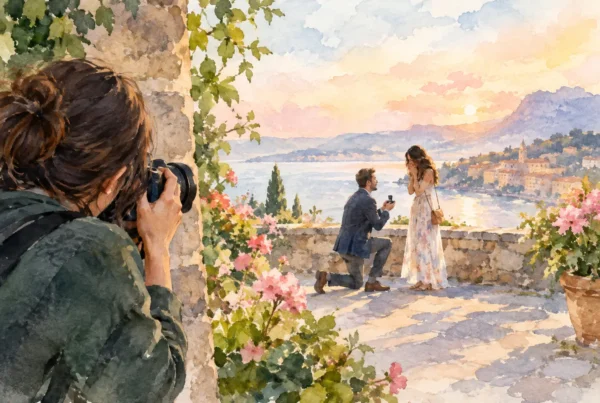

A hand reaches into a coat pocket. The other person is still looking out over the river, unaware. There is no countdown, no stiff smile toward the camera, no interruption of the breathless second before the question. That is the heart of a strong surprise proposal photo example: it does not simply show a ring. It preserves the exact feeling of being there.
The most moving proposal photographs are rarely the ones that look overly arranged. They hold the tiny details that would otherwise disappear: the nervous laugh, a hand over a mouth, the moment someone leans in and forgets the rest of the world exists. Creating that kind of image takes care long before the proposal happens, then restraint when it does.
What a Surprise Proposal Photo Example Should Show
A proposal photo is not one image. It is a short visual story with a beginning, a pause, and the release that comes after the answer. The wide scene matters because it places the couple in a real memory: perhaps the curve of Porto’s rooftops, the Douro below, or a quieter stretch of cobbled street catching late-afternoon light. But the closer frames carry a different weight.
One photograph might catch the proposer walking toward the chosen spot, shoulders a little tense, trying to act normal. Another shows the instant they drop to one knee. Then comes the reaction, which cannot be directed and should never be rushed. Some people cry immediately. Some laugh in disbelief. Some need a long hug before they can even look at the ring.
The best galleries leave room for all of it. They also include what happens afterward: the kiss, the private conversation, the raised hands, the happy walk away together. These quieter photographs often become favorites because the surprise has softened into something more intimate.
The difference between candid and careless
Candid does not mean random. A photographer still watches the background, the direction of light, passing crowds, and where each person will naturally stand. The goal is to be ready without becoming part of the scene.
That distinction is especially important in a busy destination. An iconic viewpoint can be beautiful, but it can also be crowded, noisy, and filled with phones held in the air. Sometimes the better choice is a nearby spot with space to breathe and a view that belongs to the moment rather than the tourist rush.
How the Moment Is Planned Without Feeling Planned
A surprise proposal needs a simple, believable plan. The person proposing should know exactly where to go, when to arrive, and how to recognize the photographer from a distance. The partner should only know they are heading out for a walk, dinner, wine tasting, or a few photographs from the trip.
There is a trade-off between total secrecy and perfect positioning. A highly choreographed proposal can make the light and composition easier to control, but it may feel unlike the couple. A completely spontaneous plan may feel more natural, yet bring unpredictable crowds or harsh midday sun. The right approach sits between those extremes: enough planning to protect the moment, enough flexibility to let it unfold honestly.
In Porto, timing often makes the greatest difference. Soft morning light can bring a sense of calm to the riverfront before the city fills up. In the evening, warm light can settle across the old facades and turn a simple walk into something cinematic without making it feel staged. In the Douro Valley, terraced vineyards and open views create a more private atmosphere, especially when the proposal is part of a day that already feels personal.
A discreet message before the session can settle essential details: clothing colors, the route, a backup location in case of rain, and a clear signal that says, quietly, “this is happening now.” After that, there should be very little to manage.
Why the photographer should stay invisible at first
The first reaction belongs only to the couple. A photographer who steps forward too early can change the energy of the scene, even with the best intentions. Distance and patience allow the proposal to remain private while still being documented with purpose.
Once the answer has landed, the photographer can gently reveal themselves. That is often when relief turns into excitement. The couple realizes this once-only moment was captured, and the next few minutes can become a relaxed portrait session shaped by the emotion already in the air.
There is no need to force a sequence of poses. A small prompt is enough: walk together, take a breath, look at the ring, tell each other what you were thinking. These are not instructions to perform romance. They are ways to make space for the real connection already happening.
A Surprise Proposal Photo Example, Frame by Frame
Imagine an evening in Ribeira. The couple has wandered toward the river after dinner, with the Dom Luís I Bridge in the distance. One partner slows near a quieter edge of the promenade and points out the view, buying a few seconds to steady their nerves.
From farther back, the first frame shows the city around them. It is not merely a landmark photo. Their closeness is visible even before anything happens. The next image catches a hand moving toward a pocket. Then the proposal begins.
The strongest frame may not be the kneel itself. It may be the split second afterward, when surprise registers fully: a step back, both hands lifted, eyes bright with tears. In another frame, the proposer is looking up, waiting. The river, bridge, and evening light remain present, but they are not competing for attention.
After the yes, the pace changes. There is a close photograph of the ring being slipped on, then an embrace with faces hidden against each other’s shoulders. The final images are made while they walk through the city, still slightly stunned, laughing at nothing in particular. Those pictures tell the fuller truth: not just that a proposal occurred in Porto, but that this was their night in Porto.
Details That Make Photos Feel Like Your Story
Choosing a location solely because it is recognizable can flatten the experience. A couple who loves quiet mornings may feel more themselves on a peaceful garden path than at a famous overlook. Someone planning a grand gesture may want the drama of a bridge view or vineyard horizon. Neither choice is better. It depends on the people in the photographs.
Clothing deserves the same thoughtful simplicity. Wear something that feels like you, just a little more considered. Avoid bringing a complete change of character for the sake of a photo. Comfort matters, especially on Porto’s hills and stone streets, and the most enduring images tend to be the ones where people can move naturally.
It also helps to release the expectation of perfection. Wind may lift a dress. A tram may pass at exactly the wrong or right moment. The sky may be pale rather than blazing gold. Real travel memories come with texture. A photograph with genuine feeling will outlast a perfectly controlled scene every time.
By RuPe approaches proposals with that balance of preparation and quiet observation: the route is considered, the light is understood, and the moment is allowed to remain yours. The final images should feel less like proof that a proposal happened and more like a doorway back into the feeling of it.
When you look at a surprise proposal photograph years later, the location should bring back more than a place on a map. It should return you to the pause before the question, the sound of the answer, and the person standing in front of you when everything changed.