
A proposal lasts seconds, but the person asking has usually carried the moment for weeks: the ring tucked away, the location quietly researched, the story rehearsed and re-rehearsed. Understanding how proposal photography works means knowing that the photographer’s job is not to direct that emotion. It is to protect it, anticipate it, and preserve it as it happens.
For a surprise proposal, the best photographs never feel like a production. They hold the glance before the question, the disbelief, the laugh through happy tears, and the way you both forget anyone else is nearby. A little planning makes that kind of honesty possible.
How proposal photography works before the question
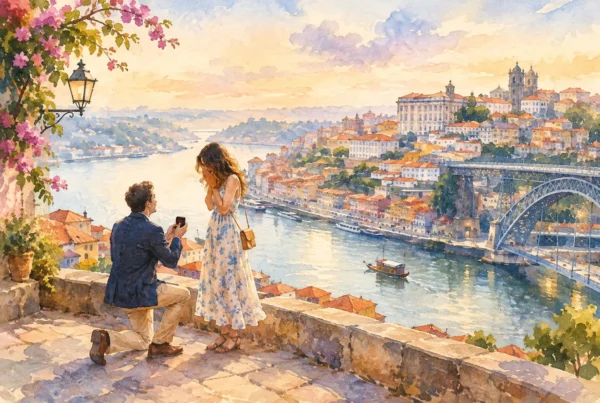
The process begins with a private conversation. You share the plan, the date, where you are staying, what your partner knows about the day, and the kind of setting that feels like the two of you. Perhaps it is a quiet lookout over the Douro at first light, a cobbled street before the city gets busy, or a vineyard terrace with hills rolling out behind you.
Details matter, but not because the plan needs to become rigid. A photographer needs to know which direction you will approach from, where you are likely to stop, which hand will hold the ring, and whether your partner is likely to notice a camera. A recent photo of you both can help with recognition in a busy place. So can a simple signal, such as adjusting a jacket or stopping beside a specific view.
The location is chosen for more than a famous backdrop. Privacy, light, access, foot traffic, and the ease of getting there all shape the experience. A spectacular viewpoint can be crowded at sunset. A quieter nearby corner may give you more space to breathe, with just as much atmosphere in the photographs. It depends on whether you value a grand scene, intimacy, or a balance of both.
Timing is part of the story
Good light helps, but timing is about emotion as much as color. Early morning often gives couples more privacy and a gentler pace. Late afternoon can bring warm light across Porto’s tiled facades and river views, but it can also mean more people passing through the frame.
The proposal should happen when it makes sense within your day. If your partner would be suspicious of waking up before sunrise, a quiet walk before dinner may be the better choice. If they love an unhurried morning and coffee by the river, that can become the natural reason to be there. The best plan feels believable to the person you are asking.
Weather also deserves a calm Plan B. Porto can offer glorious light and sudden rain, sometimes on the same day. A covered arcade, an elegant hotel space, a sheltered garden, or a different time window can save the experience without making it feel compromised. Rain is not automatically a problem. It can create reflective streets and a more private atmosphere, as long as you are both comfortable in it.
The photographer stays close without being obvious
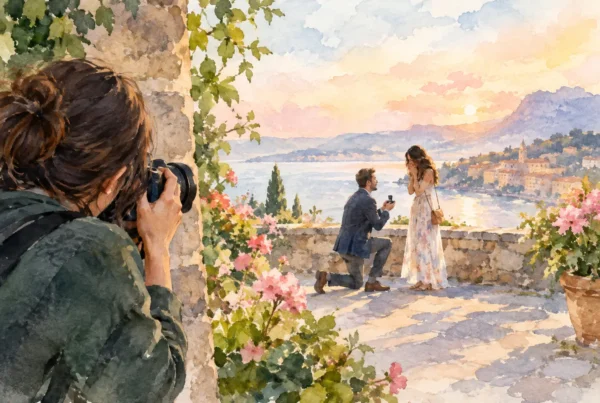
On the day, the photographer arrives early, checks the light, and settles into a position that makes sense for the planned moment. Depending on the location, they might look like another traveler taking photos, wait at a distance, or blend into a café terrace nearby. The goal is discretion, not disappearing so completely that the moment is missed.
You do not need to look at the camera or hit a precise mark. Walk together, take your time, and let the place be part of the day. When you reach the agreed spot, pause, say what you came to say, and allow the moment to unfold. There is no need to rush because a photographer is present.
A documentary approach is especially valuable here. The important frames are not only the kneeling photo or the ring itself. They are your partner’s face when they begin to understand, the hands reaching for each other, the hug that lasts longer than expected, and the relief or joy on your own face once the answer arrives.
There are practical trade-offs. Shooting from farther away protects the surprise but can make the images feel more environmental, with the city or landscape playing a larger role. Working closer can capture more expression and detail but requires a more carefully designed cover story. An experienced photographer will recommend the approach that best fits the location and your partner’s awareness.
What happens after the yes
Once the immediate emotion has had room to land, the photographer usually approaches, introduces themselves, and gives you a moment to celebrate. This is where a proposal session can gently become a short engagement portrait session, without turning into stiff posing.
You might walk through a nearby street, pause at a viewpoint, share a glass of wine, or simply stand together and take in what happened. Rather than asking you to hold unnatural smiles, your photographer may offer small prompts: walk toward the light, tell each other what you remember from the moment, or take a minute to look at the ring together. These are invitations to interact, not instructions to perform.
This part is worth protecting in your schedule. If you have a reservation immediately afterward or family waiting on a video call, you may feel pulled away before the excitement has settled. Allowing even 30 to 60 minutes after the proposal gives you space to make photographs that feel relaxed and newly engaged, rather than hurried between plans.
If you are traveling, think about your clothes with the same practical mindset. Wear something that feels like you, but consider walking surfaces, wind, and temperature. Shoes that let you move comfortably will matter more than a look that only works while standing still. If your partner would love to dress up, build a believable reason into the day, such as dinner, a wine experience, or a special outing.
The images are edited as a complete memory
Afterward, the photographer selects and edits the images as a story rather than delivering a stack of near-duplicates. The final collection should move through anticipation, the proposal, the reaction, and the quieter moments after. It should feel connected to the place while keeping the two of you at the center.
Editing is where a fine-art eye can bring consistency to changing weather and difficult light, but it should not erase reality. Skin should look like skin. The warmth of a sunset should still feel believable. Porto’s blue tile, stone, and river light can be beautiful without competing with the feeling on your faces.
Delivery timing and the number of final images vary by photographer and session length, so ask about both before booking. It is also wise to discuss whether you would like a few early images to share with family, or if you prefer to keep the news just between you for a little longer. There is no wrong choice. Some couples call everyone from the location; others protect the first evening as their own.
A few things that make the experience easier
Keep the ring secure and accessible, but do not overcomplicate the handoff. Choose one reliable pocket, bag, or jacket compartment, and practice opening it naturally. If you are carrying a backpack or camera bag, consider how you will set it down without giving away the plan.
Tell the photographer what would genuinely upset your partner. Maybe they dislike being watched, hate attention from strangers, or would never want a proposal in a crowded restaurant. That information is more useful than a long list of visual references because it helps shape a moment that feels true to them.
Also, release the idea that everything must happen exactly as imagined. A passing tram, a curious dog, wind in your hair, or a burst of laughter can become part of the memory. At By RuPe, the intention is never to force a perfect scene. It is to notice the real one with care.
The most meaningful proposal photographs do not ask you to recreate the moment later. They let you return to the feeling of being there: the beautiful place you chose, the breath before the question, and the unmistakable joy of hearing yes.