
A photograph can show where you stood. The right photograph can bring you back to how it felt: the laugh that interrupted a sentence on a Porto side street, the nerves before a proposal, your child reaching for your hand as the river catches the late-afternoon light. That is the real difference in documentary versus traditional portraits. It is not simply a choice between candid and posed. It is a choice about how you want to remember the experience.
For many travelers, the idea of a portrait session brings up a familiar worry: What do we do with our hands? What if we look awkward? A thoughtful session should make those questions disappear. Still, traditional portraiture and documentary photography each have a place. Knowing what they offer helps you choose a style that feels like you, rather than performing a version of yourselves for the camera.
What Traditional Portraits Do Well
Traditional portraits are made with intention and control. The photographer considers where everyone stands, how bodies relate within the frame, where the light falls, and when the expression is at its most flattering. You may be asked to look at the camera, turn a shoulder, bring your faces closer, or hold still for a moment.
There is real value in that clarity. A multigenerational family traveling together may want one polished image where every face is visible. A solo traveler may want a strong, editorial portrait against the tiled facades or grand architecture of Porto. Couples often appreciate a few composed frames that feel timeless enough to print, frame, and keep for decades.
Traditional does not have to mean stiff. Good direction can be subtle and kind. A photographer might place you in beautiful light, give your hands somewhere natural to rest, and let the image settle without overworking it. The result is more refined than accidental, but it can still feel relaxed.
The trade-off is that a fully traditional session asks you to pause the experience more often. You are creating photographs together, rather than simply moving through the day. For some people, that feels reassuring. For others, it can pull attention away from the reason they came to Portugal in the first place.
Documentary Versus Traditional Portraits: The Real Difference
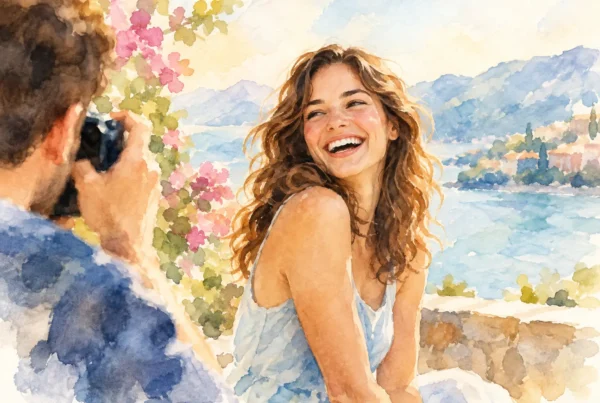
Documentary photography begins with observation. Instead of asking you to hold a smile, the photographer watches for the small exchanges that already belong to you: the way you look at each other before crossing a street, a private joke over coffee, the quiet breath before someone says yes.
It is not careless or hands-off. Strong documentary work requires anticipation, timing, composition, and an understanding of human rhythm. The photographer is still shaping the frame, finding the light, and choosing the moment. The difference is that the emotion leads, rather than the pose.
On a walk through Ribeira, for example, a traditional portrait might place you at a river viewpoint and guide you into a balanced composition. A documentary approach might photograph you arriving there, reacting to the view, fixing each other’s jacket collar in the breeze, then standing together in a way that is entirely your own. Both can be beautiful. One is more composed; the other often carries more of the story around the scene.
Documentary images are especially powerful when the moment cannot be repeated. A surprise proposal is the clearest example. The best photograph is rarely the one made after everyone has recovered and faced the camera. It is the quick intake of breath, the hands covering a face, the immediate embrace, and the seconds when the rest of the city seems to disappear.
The Myth That Candid Means No Guidance
Clients sometimes imagine documentary photography means being left alone without any help. That is not the goal. Most people are not used to being photographed, and a little reassurance changes everything.
A relaxed documentary session often includes gentle direction at the beginning. You may be shown where the light is best, invited to walk slowly, or given a simple prompt such as talking about the first thing you noticed about each other. These are not instructions to manufacture emotion. They are small ways to create space for real interaction.
There may also be a few moments of more direct guidance. If a setting is extraordinary and the light is perfect, it makes sense to pause for a portrait. If your family is together in the Douro Valley only once, creating one frame where everyone is visible is worth doing. The strongest sessions usually move between these modes naturally: a little direction, plenty of room to be yourselves, and an experienced eye ready when something genuine happens.
Which Style Fits Your Trip?
Your answer may depend less on your personality than on the reason for the session. A honeymoon or anniversary often suits a documentary-led approach because the photos become part of the day rather than an interruption to it. You can wander, stop for wine, take in a viewpoint, and leave with images that hold the atmosphere of the trip as well as your faces.
Families often benefit from a mix. Young children do not usually enjoy standing still for long, and they do not need to. Their energy, curiosity, and occasional chaos are often the most recognizable parts of this chapter of family life. A few organized group portraits can sit alongside the running, snack breaks, piggyback rides, and unplanned laughter.
For solo travelers, the choice is more personal. If you want photographs with a fashion-forward, fine-art feel, considered direction can create elegant portraits that still feel individual. If you want to remember yourself in motion through a new city, documentary coverage may feel more honest. Neither choice is more authentic by default. Authenticity comes from whether the experience and the images resemble you.
A surprise proposal calls for discretion first. Planning the timing, route, and exact place matters, but the photography should not announce itself. Once the question has been asked, there is time for a few beautiful portraits together. Before that, the photographer’s role is to preserve the moment without stepping into it.
Think About What You Want to Feel Later
When choosing a photographer, look beyond whether you like a single image on a screen. Ask what is happening inside it. Are the people looking at the camera, or at each other? Does the photograph feel polished, spontaneous, quiet, energetic, romantic, playful? Are there images from different distances: the grandeur of the landscape, the details of your hands, and the expressions that pass between you?
A gallery should also show consistency. Anyone can make one striking portrait when everything aligns. A meaningful collection holds together through changing weather, moving children, crowded streets, bright sun, and the awkward first minutes when people are still settling in. Experience matters because real life does not arrive in perfect conditions.
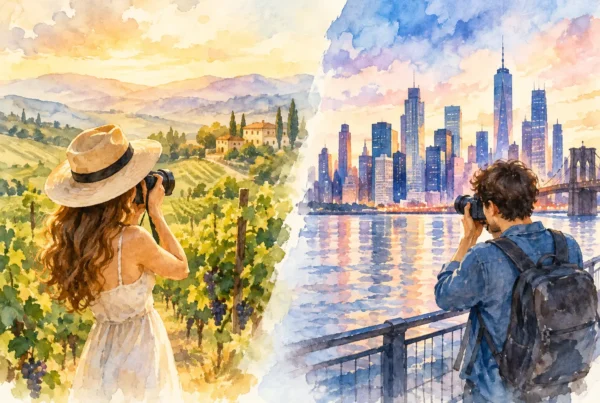
Porto and the Douro Valley reward photographers who know when to move and when to wait. Morning light can soften a quiet street before it fills with visitors. A terraced vineyard can feel vast from one angle and intimate from another. The aim is never to turn the setting into a backdrop that overwhelms you. It is to let the place become part of your story.
You Do Not Have to Choose Only One
The most personal answer to documentary versus traditional portraits is often a blend. You can have the elegant portrait your parents will want to frame and the in-between image you will love most: your partner laughing before the shutter was expected, your child leaning into you, the wind catching your hair as you turn toward the river.
Tell your photographer what makes you nervous, what you usually like about photographs of yourselves, and what you hope to remember. Then give yourselves permission to stop trying to look photogenic. Be present with the person or people you came with. The images worth keeping usually begin there.