
A vineyard session versus city shoot is not really a choice between two pretty backdrops. It is a choice about how you want your Portugal story to feel when you look back on it years from now. Do you picture yourselves moving slowly through terraced vines as the light turns warm, or wandering hand in hand through tiled streets, riverside alleys, and the pulse of Porto?
Both can hold real connection. Neither requires you to perform for the camera. The better choice is the one that gives you room to be yourselves.
Vineyard Session Versus City Shoot: Start With the Feeling
A city shoot has energy. Porto rewards people who like to walk, notice details, and let a day unfold naturally. There is the texture of old stone underfoot, laundry above narrow streets, the bright facades of Ribeira, and the changing view of the Douro as you cross toward Gaia. A city session feels alive because the setting is always giving you something new.
For couples who have just arrived, who love architecture, or who want their photographs to feel woven into a real travel day, the city is often the natural fit. You do not need to stand in front of every landmark. A good session can move between recognizable views and quieter corners, leaving space for coffee, conversation, and the unscripted moments that make images personal.
A vineyard session shifts the pace completely. In the Douro Valley, the landscape creates a sense of scale that no city can imitate. Vine-covered terraces roll toward the river. Stone paths lead somewhere quiet. Late-afternoon light settles across the hillsides in a way that makes even a simple walk feel cinematic, without making it feel staged.
Choose the vineyard if your idea of romance is less about movement through a place and more about being present in one. It suits honeymooners, anniversaries, intimate engagements, and travelers who want an experience built around pause, scenery, and time together.
What the City Gives You That the Valley Cannot
Porto is full of visual contrast. One moment, you are beside a grand river view; the next, you are tucked into a narrow lane where the walls carry decades of color and wear. That variety gives a city shoot an editorial edge. Your final collection can feel like several chapters of the same afternoon rather than one long scene.
It is also the stronger option when your schedule is tight. A city session can fit naturally around hotel check-in, dinner plans, or a single free morning. There is no need to turn the day into an excursion unless you want to. For travelers staying in central Porto, this makes the experience beautifully simple.
The city can be especially good for people who worry they will feel awkward in photos. Walking gives your hands and attention somewhere to go. You can talk, laugh at a wrong turn, look out over the river, or stop when something catches your eye. No forced poses – just real moments, honestly captured.
That said, Porto is a working city, not a private set. Popular areas can be busy, especially in peak travel months. The right route and timing matter. Early morning offers quieter streets and soft light, while later in the day can bring a warmer, more social atmosphere. If having a wide-open background in every frame matters deeply to you, the valley may feel more relaxed.
City shoots suit travelers who want place and personality
A city session is often right when the destination itself is part of the story. Perhaps Porto is where you got engaged, where you began a longer Portugal trip, or where you are celebrating a milestone with your family. The photographs can hold the visual character of the city without turning you into tourists posing beside it.
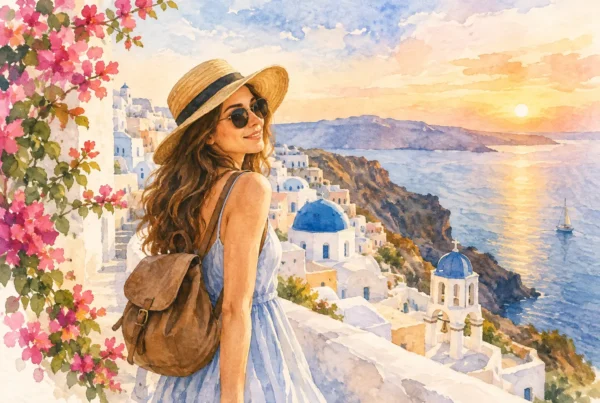
For solo travelers, it can be particularly meaningful. Instead of returning home with only quick phone snapshots, you leave with images that show you fully in the place you chose to explore. Natural portraits in a city have a sense of movement and independence that fits a solo journey well.
What a Vineyard Session Holds Differently
The Douro Valley asks for more time, and it gives something back for it. A vineyard session is usually not an add-on between breakfast and a museum. It is a chance to leave the city behind, breathe more slowly, and build part of the day around the landscape.
This setting is ideal for couples who want photographs with room around them. The terraces, river bends, and distant hills create images that feel expansive, but the experience itself can remain intimate. You might walk along a row of vines, lean together at a viewpoint, or share a glass of wine as the day softens. Nothing complicated is required.
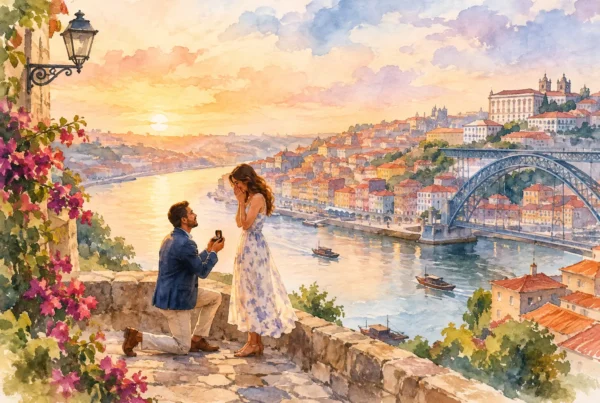
There is also a reason the Douro works so well for surprise proposals. With thoughtful planning, the setting can feel private and unhurried rather than crowded or theatrical. A photographer can help consider timing, light, access, and where to stand so the moment unfolds naturally. Afterward, there is space to let the excitement settle in instead of immediately being carried along by city traffic and a busy sidewalk.
A private wine-tour pairing can make sense if you want the photography to be part of a fuller day, not the entire event. The best version of this is never rushed. It should still feel like your trip, with time to enjoy the region rather than moving from one photo spot to the next.
The trade-off is travel, weather, and rhythm
The valley is not always the automatic choice simply because it is dramatic. Getting there takes planning, and the drive changes the shape of your day. If you only have a short stay in Porto or prefer to keep things spontaneous, a city shoot may serve you better.
Weather also matters differently in the Douro. The open landscape is beautiful in changing conditions, but summer heat can be intense, and some viewpoints are more exposed than others. Spring greenery, harvest-season color, and soft autumn light each bring their own mood. A photographer who knows the area can recommend a time that works with both the season and your comfort.
The key question is not whether the Douro is more beautiful than Porto. It is whether you want a session that feels like a destination experience in itself.
How to Choose Between a Vineyard Session and City Shoot
Think about the photographs you are most likely to print, frame, or revisit on an ordinary evening at home. If you imagine close moments against a world of hills and vines, choose the vineyard. If you see yourselves laughing on a tiled street, with river light and old buildings around you, choose the city.
Then consider your travel rhythm. A city shoot is easier to weave into a packed itinerary and can capture the excitement of being somewhere new. A vineyard session deserves a slower day and is strongest when you want to make room for it.
Your wardrobe can offer a small clue, too. City sessions work beautifully with clothes that feel polished but easy to walk in. In the valley, softer textures, flowing fabrics, and colors that sit naturally against green, stone, and golden light can feel at home. Comfort matters more than dressing for a trend. If you cannot move freely, it will show.
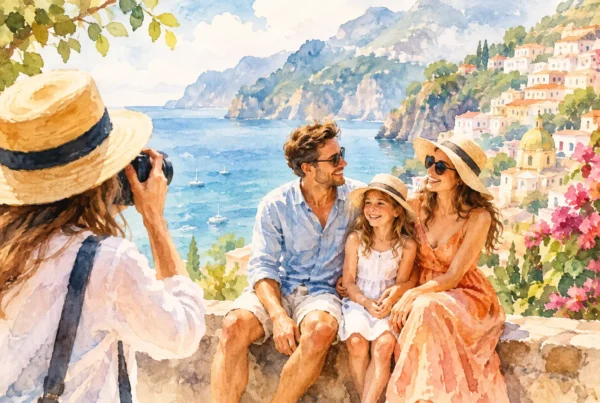
For families, think honestly about your children’s energy. The city offers visual stimulation, snack stops, and short stretches of walking. The vineyard offers freedom to roam, but it also involves travel and open terrain. Neither is universally better. The right choice is the one that matches how your family actually enjoys a day together.
You Can Let the Story Decide
Sometimes the answer is already inside the reason for the trip. A city shoot can honor the hotel where you spent your first night as newlyweds, the bridge you crossed at sunset, or the neighborhood that surprised you. A vineyard session can mark a proposal, a long-awaited anniversary, or the rare gift of having nowhere else to be for a few hours.
At By RuPe, the setting is never treated as a backdrop to conquer. Porto and the Douro are part of the story, but the real subject is the way you are with each other there.
Choose the place where you can forget about the camera fastest. That is usually where the photographs begin to feel like yours.