
Your favorite photograph from a trip is rarely the one where you stood perfectly still and smiled at a famous view. It is the frame that brings back the way Porto felt: your hand around a coffee cup, wind catching your hair near the river, laughter after taking a wrong turn on a cobbled street. Professional photography selfies can be part of that story, but only when they still feel like you.
The goal is not to make every moment look editorial. It is to give the moments that matter enough care that you can return to them years later and recognize the people, place, and feeling immediately. A phone selfie has its place. So does a photograph made by someone who knows when to step back, wait for the light, and let the scene breathe.
What Professional Photography Selfies Really Mean
A professional photography selfie is not simply a more expensive version of an arm’s-length phone photo. For travelers, it often means wanting pictures that keep the intimacy and spontaneity of a selfie while removing the awkward angle, rushed framing, and missing person behind the camera.
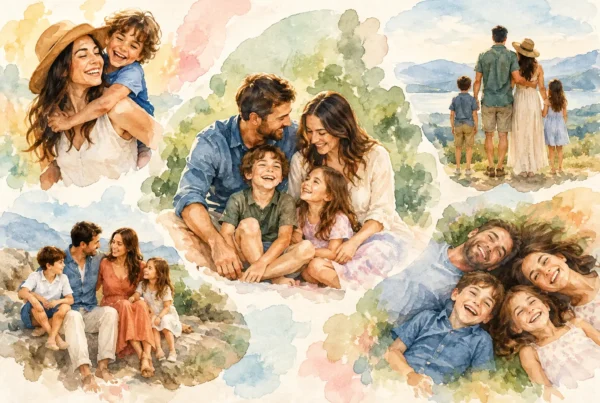
If you are traveling alone, that may mean photographs where you are genuinely present in Porto rather than appearing as a tiny figure against a landmark. For a couple, it can mean images that show how you move together, not just proof that you visited the Dom Luís I Bridge. For a family, it means everyone gets to be in the memory, including the person who normally carries the phone.
There is a useful tension here. Selfies feel immediate because you make them yourself. Professional photographs feel more considered because someone else sees what you cannot while you are inside the moment. The best session takes something from both: your personality, your pace, and the quiet polish of a well-observed image.
Keep the Moment, Lose the Pressure
Many people worry that hiring a photographer will turn a relaxed afternoon into a performance. That can happen when a session is built around a shot list, stiff instructions, and a need to look camera-ready every second. It does not have to.
A natural session is more like being shown around by a perceptive local with a camera. You walk, talk, pause where the light is good, and take in the place you came to see. The photographs happen around real interaction. There may be gentle direction when it helps – where to stand so the light falls softly, how to keep moving rather than freeze, when to look at each other instead of the lens – but the point is never to manufacture a version of you that does not exist.
This matters especially on a once-only trip. A honeymoon, anniversary, engagement, or first visit to Portugal already holds enough expectation. Your photographs should not become another item to perform perfectly.
A selfie is a record. A photograph can be a memory.
Phone images are wonderful for quick details: the tiled doorway you passed, the pastel de nata you ate before it disappeared, the ridiculous expression on your partner’s face after climbing a steep hill. Keep taking them.
But phones tend to flatten a scene. They struggle with strong midday sun, deep shade, backlit views, and the small gestures that happen before you have time to turn the camera around. They also place you at the center in a very literal way, often leaving little room for the setting that made the moment meaningful.
A photographer can give the scene its proper role. The curve of the Douro, the faded facades of Ribeira, the quiet geometry of a modern building, or the vineyard terraces beyond the city become part of the image without swallowing you whole. You are not pasted in front of Portugal. You are in it.
Choose a Setting That Gives You Something to Do
The easiest way to avoid posed photographs is to choose a location that invites natural movement. A beautiful backdrop alone is not always enough. If you have nothing to do but stand in front of it, you will probably feel it.
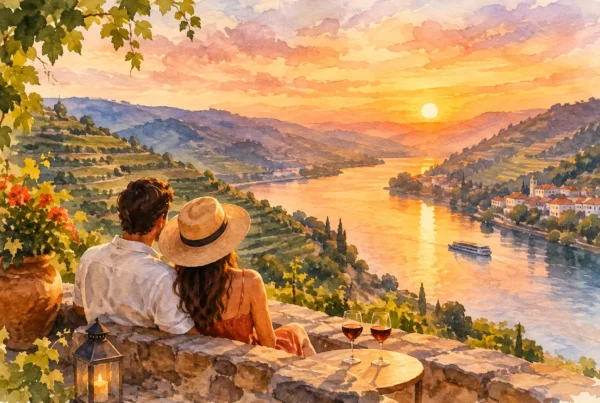
For couples, a riverside walk, a glass of wine on a terrace, or wandering through a neighborhood with no strict plan creates space for small interactions. You can talk, lean in, look around, and forget about the camera for a few seconds at a time. Those in-between seconds are often the photographs you keep.
Solo travelers can build a session around a real experience too. Browse a market, choose a table at a café, cross a bridge slowly, or pause to take in a view. The aim is not to pretend you are unaware of the camera. It is simply to be doing something that feels natural enough that your expression has a reason to exist.
In Porto, early morning can bring quieter streets and soft light on the old city. Late afternoon often creates a warmer, more cinematic feeling along the river. Neither is universally better. It depends on your energy, itinerary, season, and the kind of photographs you want. A sunrise session may be worth it for calm streets and privacy; golden hour may suit couples who want a slower, more romantic pace.
Let the Location Be More Than a Backdrop
A recognizable landmark can be meaningful, especially when it marks a place you dreamed of visiting. Still, photographs made only at the obvious viewpoints can start to look like anyone’s trip. The most personal images usually pair an iconic view with a few quieter frames nearby.
A narrow side street can hold better light than the busiest square. A weathered wall may bring out the color of your clothes. A simple stretch of pavement can give a family room to move without people constantly passing behind them. Local knowledge is less about secret locations for their own sake and more about reading what will work for you at that exact time of day.
That is also why weather is not always the enemy. Bright sunshine can be beautiful, but cloudy skies often make skin tones softer and colors richer. A little mist near the Douro can feel atmospheric rather than disappointing. If it rains heavily, the plan may need to shift. If it merely drizzles, an umbrella, reflections on the stone streets, and a willingness to embrace the day can make images that feel unmistakably yours.
Dress for Yourself, Then Consider the Frame
You do not need matching outfits or formal vacation clothes to look good in photographs. Wear something that lets you move easily and feels close to your usual style. If you never wear high heels, a steep Porto street is not the moment to start. If a jacket makes you feel more like yourself, bring it.
Color matters, but not in a rigid way. Soft neutrals, rich earth tones, faded blues, and warm colors often sit beautifully against Porto’s stone, tile, and river light. Large logos and very bright neon can pull attention away from faces. More importantly, choose pieces you will not spend the entire session adjusting.
For couples and families, aim for coordination rather than duplication. Let everyone wear a version of themselves. When clothing is too carefully matched, it can become the loudest thing in the photograph.
When a Phone Is Enough and When It Isn’t
Not every travel moment needs a photographer. If you want a quick image at dinner or a playful update for friends, your phone is exactly right. There is freedom in making a bad, blurry, joyful picture without overthinking it.
Professional photography becomes worthwhile when the occasion has emotional weight, when everyone deserves to be included, or when you want images with a stronger sense of place. It is especially valuable for surprise proposals, where timing and discretion matter more than elaborate posing. The right photographer can remain unobtrusive, anticipate the moment, and give you space to live it before any portraits begin.
At By RuPe, the approach is simple: no forced poses, just real moments honestly captured. The camera is there to pay attention, not take over.
A good photograph does not ask you to become more polished, more romantic, or more adventurous than you are. It gives you a reason to slow down long enough to notice what is already happening. Bring the phone for the small, immediate pieces of the day. Then leave room for a few images that let you step fully into the memory, together or on your own.