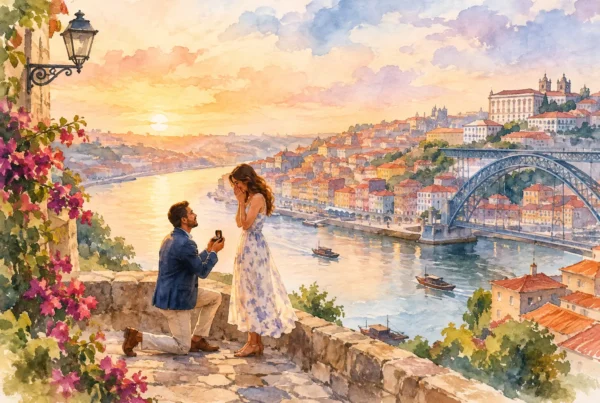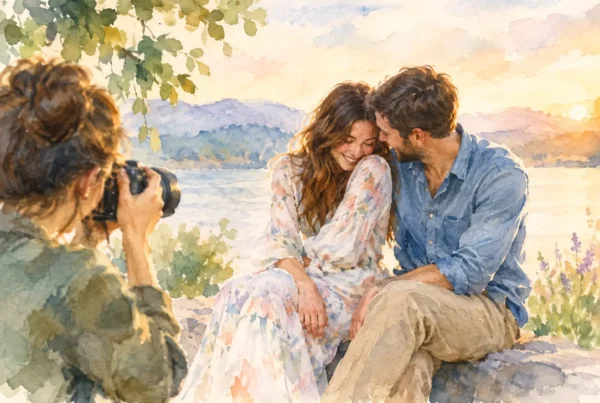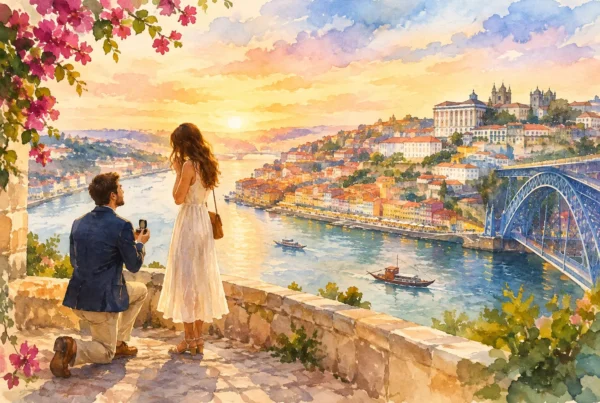

A vacation portrait should not feel like an interruption to the trip. It should feel like a piece of it: your hand finding theirs on a quiet Porto street, your family pausing after gelato, the wind catching a dress above the Douro. When clients ask how to plan vacation portraits, the best answer is simple: plan enough to feel relaxed, then leave room for the day to unfold.
The goal is not to collect a series of landmark poses. It is to return home with photographs that bring back the pace, light, and feeling of being there together.
How to Plan Vacation Portraits Around the Trip You Actually Want
Start with the experience you want to remember, not a shot list. A honeymoon morning might call for an unhurried walk through Ribeira before the streets fill up. An anniversary session may feel more like a sunset drink overlooking the river. A family session can work beautifully around an activity children already enjoy, such as riding the historic tram, sharing pastries, or exploring a garden.
This is where many vacation portraits either become personal or feel generic. The most photographed viewpoint is not automatically the right place for you. A location matters when it gives you something to do, notice, or respond to together. Cobblestones, tiled facades, a vineyard path, a river crossing, or a quiet café terrace can all create movement and conversation without asking you to perform for the camera.
Build the session into a lighter part of your itinerary. Avoid placing it after a long transfer, a full-day wine tour, or an early wake-up followed by a packed sightseeing schedule. You do not need to preserve every minute for attractions. Giving your portraits a calm 60 to 90 minutes often creates images that hold far more of the trip than another rushed stop ever could.
Choose the Right Time of Day
Light changes the mood of a place, but energy matters just as much. Early morning in Porto offers quieter streets, soft light, and a sense of having the city to yourselves. It is ideal for couples who enjoy a slow coffee and a peaceful start, or families with young children who are happiest before lunch.
Late afternoon and the hour before sunset bring warmth to the river, bridges, and hillside views. This timing is especially beautiful for romantic sessions, though popular areas will be busier. A skilled photographer can use the movement of the city as part of the story, but if you want an almost-empty backdrop, morning is usually the better trade-off.
In the Douro Valley, the season changes the character of the landscape. Spring feels fresh and green; summer has long, bright days; harvest season carries a particular energy in the vineyards; winter can be quiet, textured, and wonderfully atmospheric. There is no single perfect month. The right choice depends on whether you are drawn to golden heat, rich color, misty hills, or a more private feeling.
Pick Locations With Variety, Not a Long Checklist
Two nearby locations with different textures are usually more useful than six famous places spread across town. Constantly moving between landmarks breaks the rhythm, creates pressure, and leaves less time for real moments to appear.
Think in contrasts. You might begin among narrow streets and blue-and-white tiles, then end at an open river view. In the Douro, a vineyard row, stone terrace, and quiet road can provide a full visual story without spending half the session in a car. Variety comes from changing light, scale, and atmosphere, not from racing through a map.
Local knowledge makes a real difference here. Some viewpoints are beautiful but difficult at certain hours. Some streets are better for walking than standing still. A photographer who knows the area can suggest places that suit your pace, outfit, and comfort level, including corners that do not appear in every visitor’s gallery.
For a surprise proposal, the location needs another layer of planning. Privacy, sightlines, timing, and a believable reason to be in that exact spot all matter. The most emotional proposals are rarely over-directed. A simple plan, a discreet meeting point, and a clear signal can protect the surprise while allowing the moment to remain entirely yours.
Wear Something That Lets You Move
Vacation portraits do not require matching outfits or formalwear unless that is genuinely how you want to remember the day. Choose clothes that make you feel like a more considered version of yourself, not someone you are trying to imitate online.
Comfort shows in photographs. Wear shoes you can walk in on uneven streets, especially in Porto, where polished stone and hills are part of the landscape. Bring a second pair if you love the look of heels but do not want to spend the session balancing on cobbles. Consider layers in cooler months, and choose fabrics that move naturally in a breeze rather than needing constant adjustment.
Color is less about strict rules than visual balance. Soft neutrals, earthy tones, blues, warm reds, and muted greens tend to sit beautifully against old stone, river light, and vineyard landscapes. Avoid dressing everyone in identical outfits. Instead, choose colors that belong together while allowing each person to look like themselves.
If you are traveling light, do not buy an entire wardrobe for portraits. One thoughtful outfit you already feel good in is more valuable than a new look that arrives with uncertainty. A small bag with water, lip balm, a hair tie, and a light layer is usually enough.
Let the Session Be a Shared Experience
The fastest way to look awkward in photographs is to believe you have to know what to do every second. You do not. A natural portrait session is guided, but it is not a test.
You may be asked to walk slowly, look at each other, take a moment to notice the view, or tell a story from the trip so far. These are not tricks. They give your attention somewhere real to go. The camera catches the glances between directions, the laughter after a wrong turn, the hand squeeze before a kiss. Those small transitions are often the frames people love most.
Couples should resist the urge to check every image in the moment. Families do not need to ask children to smile on command. Solo travelers do not need to hold a pose until it feels unnatural. Trust the rhythm of the session and allow a little imperfection. A gust of wind, a passing tram, or a child deciding to run ahead can give an image its life.
Tell Your Photographer What Matters Beforehand
Good planning includes a short, honest conversation before the session. Share the reason for the trip, any meaningful details, and what makes you nervous. Perhaps one partner hates being photographed. Perhaps you are celebrating ten years together. Perhaps you want photographs that feel editorial but still warm, or you need to keep a proposal completely under wraps.
Also mention practical needs: mobility considerations, young children’s routines, a favorite neighborhood, or a location you would rather avoid. The more clearly a photographer understands the people in front of the camera, the less the experience needs to rely on generic direction.
It can also help to share a few images you are drawn to, not as a list of frames to copy, but as a way to describe the feeling you like. Maybe it is intimate, playful, cinematic, quiet, or full of movement. That gives creative direction without turning the session into a recreation of someone else’s trip.
Leave Space for Weather and the Unexpected
Portugal often offers generous light, but weather still deserves a place in the plan. A flexible schedule is especially valuable in shoulder seasons, when a brief rain shower might pass quickly or turn the city’s stone streets into something reflective and cinematic.
Do not assume overcast weather is a disappointment. Clouds can soften shadows, deepen color, and make midday locations more forgiving. Rain does not work for everyone, particularly with small children or a proposal, but a calm backup plan removes unnecessary stress. The important thing is to decide in advance what feels comfortable for you.
Finally, do not schedule a portrait session solely for proof that you visited somewhere beautiful. Schedule it because this version of your life deserves to be remembered with you in the frame. Leave the itinerary open enough to wander, breathe, and notice each other. That is where the photographs begin.